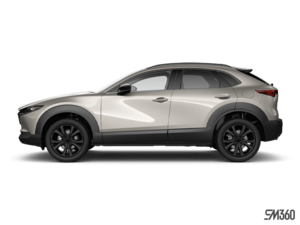
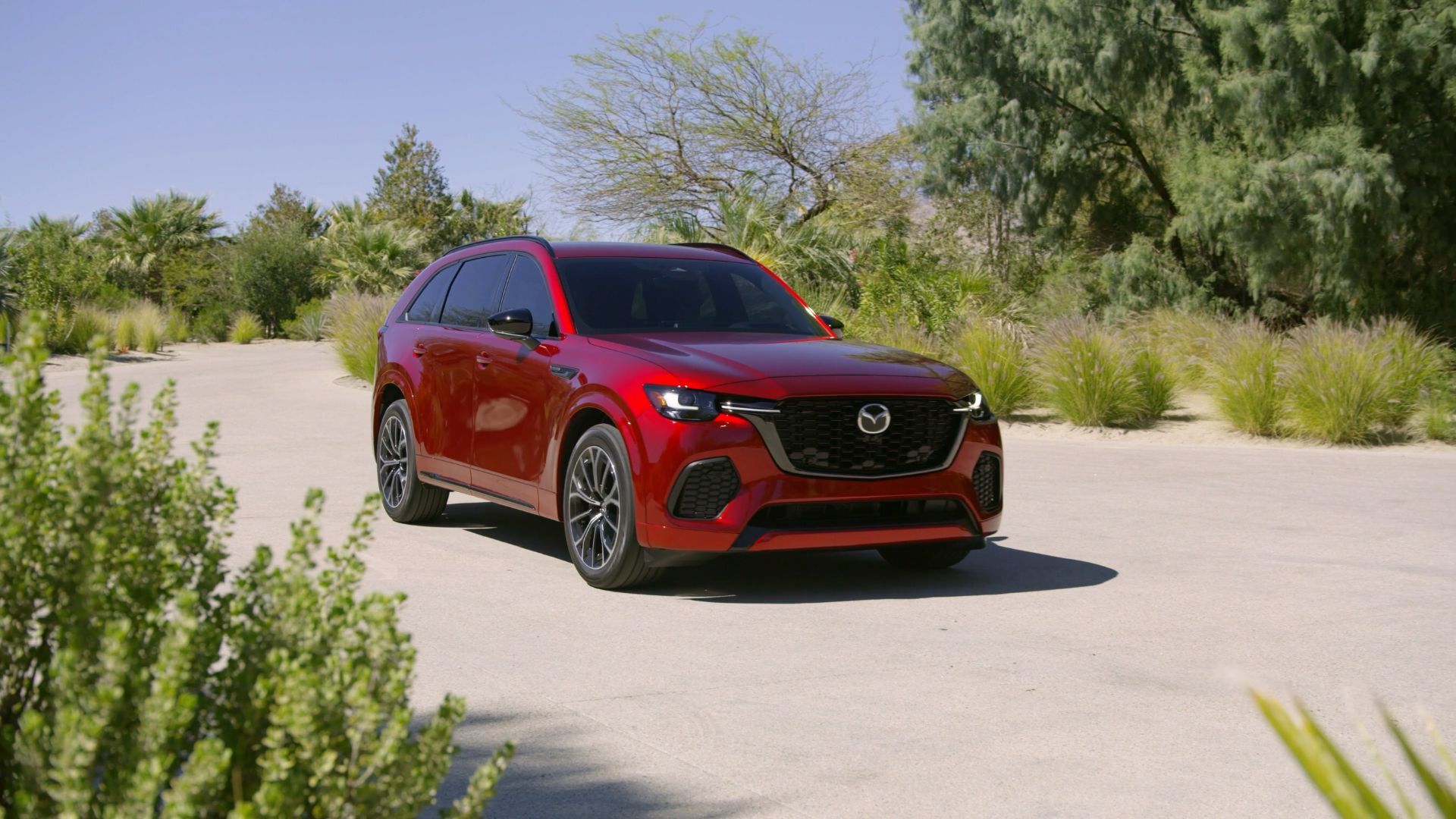
How the 2026 Mazda CX-30's Updated Suspension and Brake LSD Handle BC's Wet-Season Roads
June 12 2026,
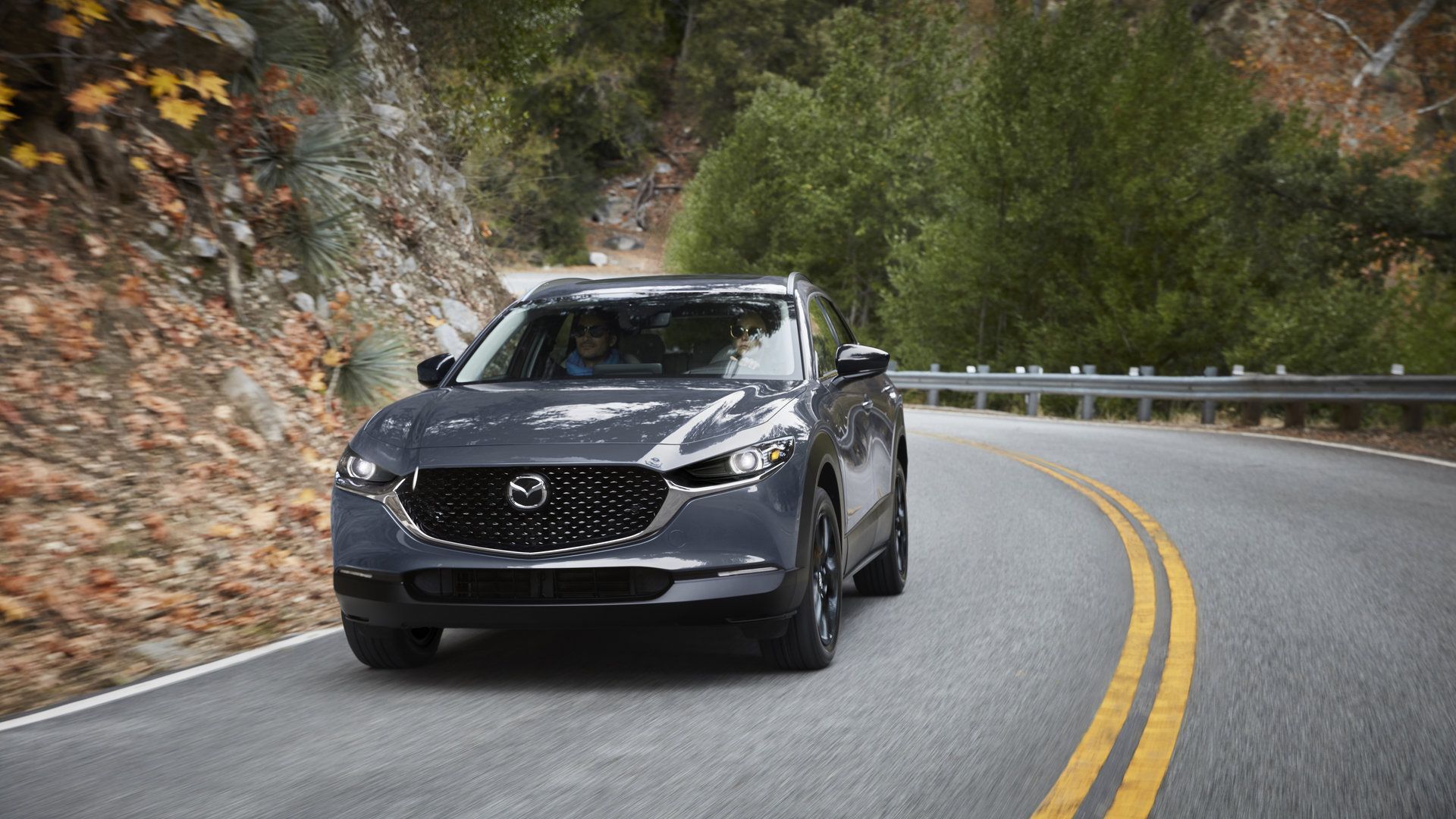
Drivers in Burnaby and across British Columbia spend a significant portion of the year navigating roads that are wet, slick, or unpredictably variable. From the rain-soaked urban streets of Metro Vancouver to the damp mountain approaches in fall and early winter, surface conditions change faster than the weather forecast. For 2026, Mazda has made two targeted changes to the CX-30 that directly address this reality: updated dampers across the entire lineup and the addition of a standard Brake Limited Slip Differential.
Neither of these updates is a headline-grabbing powertrain change. Both are engineering refinements that affect how the vehicle responds when road conditions get away from ideal. Understanding what each one does — and what it does not do — gives BC drivers a clearer picture of why these changes matter for day-to-day driving in this province.
What Changed for 2026
Every trim in the 2026 CX-30 lineup benefits from updated dampers and a newly standard Brake Limited Slip Differential. These changes apply from the entry-level GX through to the GT Turbo. No trim selection is required to get them — they come standard on every CX-30.
The CX-30 also retains its full suite of standard traction and stability technology: i-Activ AWD, G-Vectoring Control Plus, Off-Road Traction Assist, Dynamic Stability Control, and Traction Control System. The 2026 updates layer on top of that existing foundation rather than replacing it.
- Updated dampers across all 2026 CX-30 trims — improved ride comfort and body motion control
- Brake Limited Slip Differential — standard on all trims, new for 2026
- Standard i-Activ AWD retained on every CX-30 model
- G-Vectoring Control Plus and Off-Road Traction Assist also standard
What the Updated Dampers Actually Do
A damper — commonly called a shock absorber — controls how quickly the suspension compresses and rebounds after encountering a bump or surface change. When a damper is well-tuned for a specific vehicle, the body stays composed over irregularities without bouncing or pitching excessively. When dampers are not optimally calibrated, the vehicle can feel unsettled over rough pavement, and body roll in corners can become more pronounced.
The 2026 CX-30's damper update is described by Mazda as improving ride comfort — meaning the recalibration addresses how the vehicle absorbs road inputs rather than stiffening the suspension. For Burnaby drivers, this has two practical effects. On the city's cracked and patched urban surfaces — common after years of rain cycles and frost heave even at lower elevations — the updated dampers reduce the transmission of sharp inputs into the cabin. On longer drives along wet provincial routes, better body control means the vehicle tracks more predictably when surface conditions shift between dry and saturated sections.
The CX-30's suspension architecture itself is unchanged for 2026: an independent MacPherson strut setup at the front with coil springs and a stabilizer bar, and a torsion beam at the rear. The damper update works within that existing structure.
What a Brake LSD Does — and Why It Matters in BC

A Limited Slip Differential (LSD) addresses a specific traction problem: what happens when one driven wheel has significantly more grip than the other. In a standard open differential, the wheel with less grip receives the power — the path of least resistance. On a wet intersection where one front wheel is on painted road markings and the other is on dry asphalt, for example, an open differential tends to send drive to the slippery side, producing wheel spin and reduced forward momentum.
A Brake LSD works by selectively applying braking force to the spinning wheel. By partially slowing the wheel that is losing grip, the system diverts torque to the wheel that has traction. The driver experiences this as more consistent forward progress rather than a momentary loss of drive. The system operates automatically and requires no input — it functions through the same braking hardware already present on the vehicle.
For British Columbia drivers, the scenarios where a Brake LSD earns its presence are specific and common. Wet painted crosswalk markings at intersections. Leaves on road surfaces in autumn. Shaded sections of road that stay damp long after surrounding pavement has dried. Shallow standing water in parking structures or on side streets. On i-Activ AWD crossovers, the system works in combination with the AWD's torque distribution rather than replacing it — a front wheel that has already received torque from the AWD system gets an additional stability layer from the Brake LSD if it begins to spin.
How the Brake LSD Fits Into the CX-30's Broader Traction System
The 2026 CX-30 runs four distinct traction and stability systems simultaneously, each addressing a different aspect of vehicle control. Understanding how they interact helps clarify what the Brake LSD adds and where the other systems leave off.
G-Vectoring Control Plus (GVC Plus) operates through minute engine torque adjustments rather than brakes or steering inputs. When the driver initiates a corner, GVC Plus momentarily reduces torque to shift weight forward onto the front wheels, improving their grip during turn-in. On exit, it increases torque to stabilize the vehicle as it straightens. The result is more linear steering response through corners, even on wet pavement — a refinement drivers notice without necessarily identifying.
i-Activ AWD continuously monitors 27 vehicle parameters — including wheel speed, steering angle, and G-forces — to distribute torque between the front and rear axles before a traction loss event occurs. Rather than reacting after a wheel has already spun, i-Activ AWD pre-emptively adjusts torque split to match conditions. In steady rain, it may already be sending a percentage of drive to the rear wheels before the driver has any sense that the surface ahead is slick.
Off-Road Traction Assist handles low-speed, low-grip situations such as loose gravel, shallow mud, or unpaved paths. It modulates braking on individual wheels to help the CX-30 maintain forward progress when i-Activ AWD's normal torque management reaches its limit.
The Brake LSD covers the gap between these systems at low-to-moderate speeds on pavement — the scenario where a single driven wheel loses grip momentarily due to a surface contaminant. It does not replace AWD, and it does not prevent wheel spin in all conditions. What it does is narrow the window in which unexpected wheel spin occurs on paved surfaces.
Key Takeaways
|
2026 Update |
What It Does |
When It Matters in BC |
|---|---|---|
|
Updated dampers |
Improved absorption of road inputs, better body composure |
Wet urban pavement, cracked surfaces, mountain switchbacks |
|
Brake LSD |
Selective braking of spinning wheel to redirect torque |
Wet painted markings, autumn leaves, shaded damp sections |
|
i-Activ AWD (retained) |
Proactive torque distribution front-to-rear |
Rain, gravel, light snow at lower elevations |
|
G-Vectoring Control Plus (retained) |
Engine torque modulation for cornering stability |
Wet corner entry and exit at all speeds |
Learn More at Metrotown Mazda in Burnaby
The 2026 Mazda CX-30 is available now, and both the damper updates and the Brake LSD are standard across all trim levels. If you are shopping a compact crossover for year-round use in British Columbia and want to understand how these changes affect the driving experience on roads you actually use, our team at Metrotown Mazda in Burnaby is glad to walk you through it. Stop in or reach out to arrange a test drive.