Comparing the 2026 Mazda CX-5 and CX-30: Which Compact Crossover Fits Your Driving Needs in Burnaby?
May 11 2026,
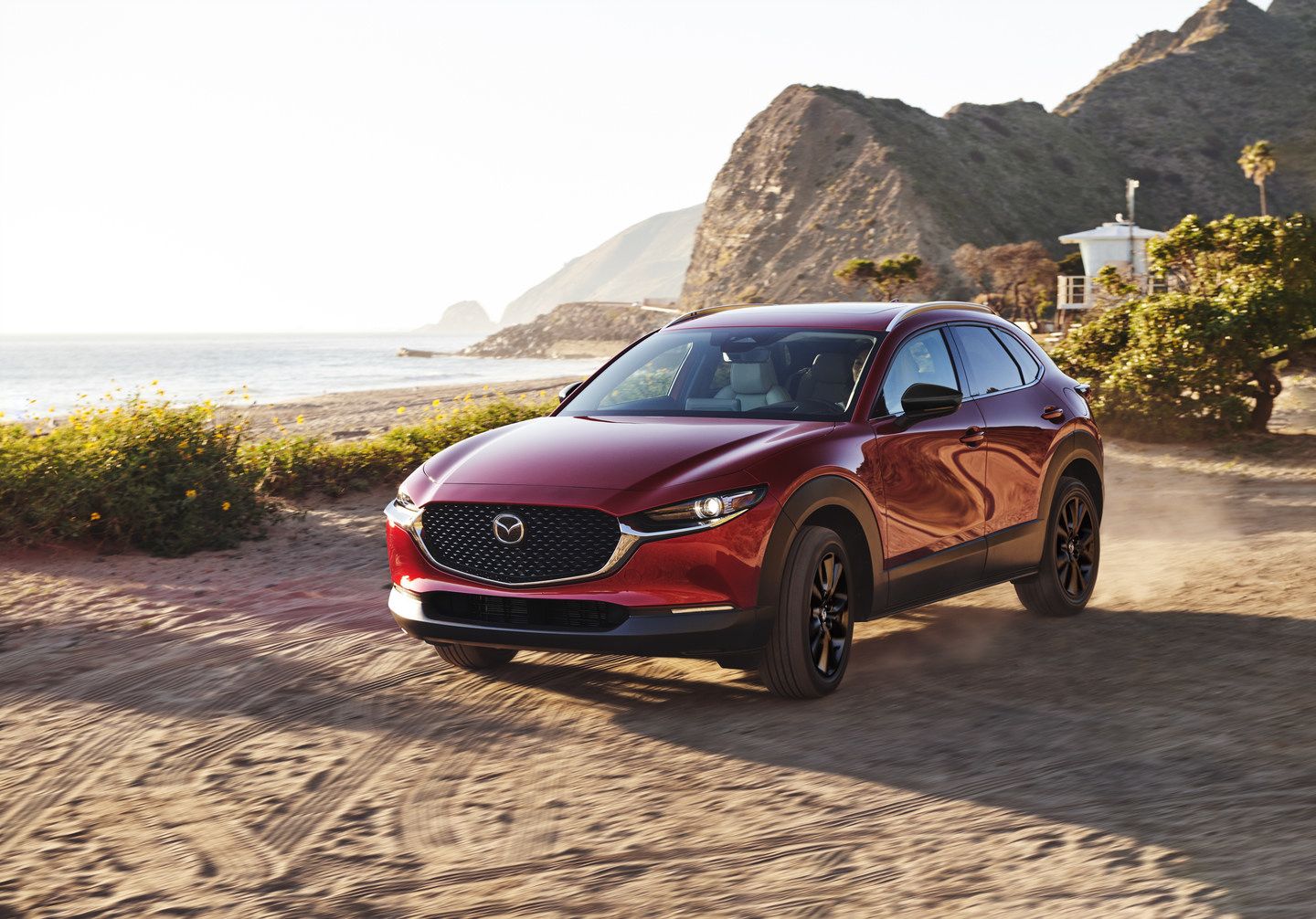
The 2026 Mazda CX-5 and 2026 Mazda CX-30 share more than a badge. Both come standard with i-Activ all-wheel drive, both include Mazda's i-Activsense suite of safety and driver-assistance technology, and both are built around the same Skyactiv-G 2.5 L four-cylinder engine family. They even share the same Kodo design language. For a buyer in Burnaby cross-shopping within the Mazda lineup, it can be hard to tell from a quick glance which model is the better fit.
The differences, however, are real and practical. The CX-5 is a full third-generation redesign for 2026, with a noticeably larger cabin, a new infotainment platform, and more cargo space than before. The CX-30 is a more compact crossover with new-for-2026 mechanical upgrades, a turbocharged engine option, and a footprint built for tighter urban environments. This comparison breaks down the key areas where they diverge so you can match the right model to the way you actually drive in British Columbia.
At a Glance: 2026 Mazda CX-5 vs. 2026 Mazda CX-30
|
Specification |
2026 Mazda CX-5 |
2026 Mazda CX-30 |
|---|---|---|
|
Base Engine |
2.5 L Skyactiv-G I4, 187 hp / 185 lb-ft |
2.5 L Skyactiv-G I4, 186 hp / 186 lb-ft |
|
Turbo Option |
Not available at launch (hybrid coming 2027) |
2.5 L Skyactiv-G Turbo, 250 hp / 320 lb-ft (premium fuel) |
|
Transmission |
6-speed automatic |
6-speed automatic |
|
Drivetrain |
Standard i-Activ AWD |
Standard i-Activ AWD |
|
Cargo (Behind Rear Seats) |
954 L |
572 L |
|
Cargo (Total, Seats Folded) |
1,882 L |
1,280 L |
|
Largest Display |
15.6-inch touchscreen (available) |
10.25-inch touchscreen (GS and above) |
|
Infotainment Platform |
Google built-in (Google Maps, Google Play Store) |
Mazda Connect with Apple CarPlay / Android Auto |
|
New for 2026 |
Full third-generation redesign |
Updated dampers, brake Limited Slip Differential |
|
Safety |
i-Activsense standard; new ADAS features added |
i-Activsense standard; Cruise and Traffic Support on select trims |
Interior Space and Cargo Capacity
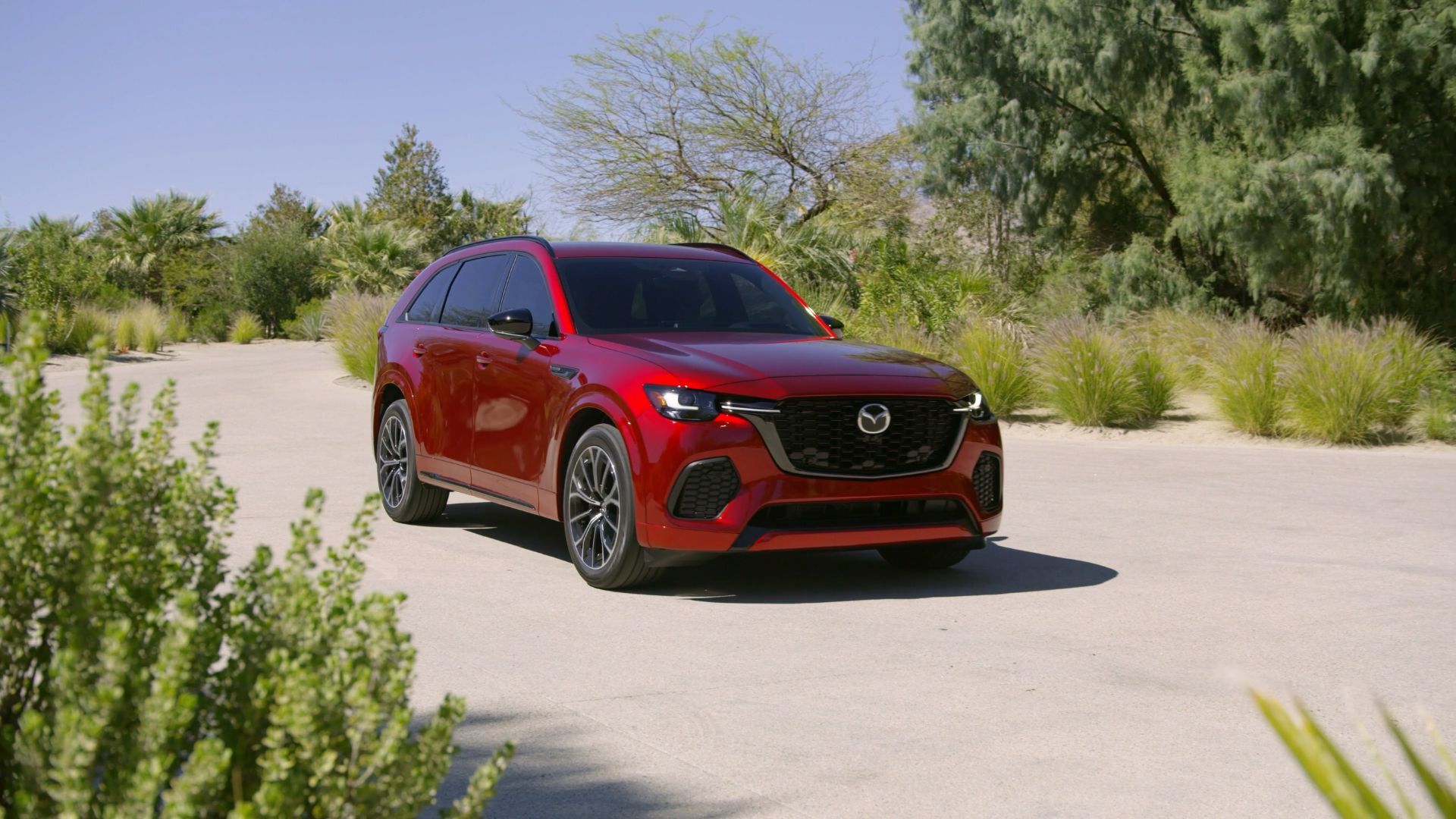
This is the category where the two models are furthest apart. The all-new 2026 CX-5 added 4.5 inches to both its overall length and wheelbase compared to the previous generation, and much of that growth went directly into rear-seat legroom and cargo capacity. Behind the rear seats, the CX-5 offers 954 L of cargo space. With the rear seats folded, that number climbs to 1,882 L. The cargo area itself is nearly two inches longer and over an inch taller than before, with a lower lift-in point for easier loading.
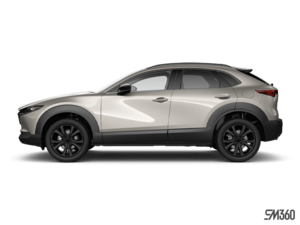
The CX-30 is a smaller vehicle by design. It offers 572 L behind the rear seats and 1,280 L with seats folded. Its overall length is 4,395 mm — roughly 30 cm shorter than the redesigned CX-5 — and its wheelbase is shorter at 2,652 mm. Rear-seat legroom is tighter as a result.
For Burnaby households that regularly carry passengers in the back seat, load up for weekend trips, or need to fit bulky items like strollers, sports equipment, or camping gear, the CX-5 has a clear advantage. For solo commuters or couples who prioritize a compact footprint and easier manoeuvring in tight parking areas — Metrotown's underground lots, for example — the CX-30's dimensions are easier to work with.
Technology and Infotainment

The 2026 CX-5 introduces the biggest technology upgrade in Mazda's compact crossover history. It is the first Mazda to feature Google built-in as standard equipment, which means Google Maps, the Google Play Store, and Google's voice assistant run directly on the vehicle's screen — no phone mirroring required. The available 15.6-inch touchscreen is the largest Mazda has ever offered, and the system supports Gemini, Google's AI assistant, for natural-language voice commands. Apple CarPlay and Android Auto are also supported as standard for drivers who prefer smartphone mirroring.
The CX-30 uses the Mazda Connect infotainment system. On the GX trim, it runs on an 8.8-inch display controlled by the multi-function commander knob. From GS and above, the display grows to 10.25 inches with touchscreen functionality for wireless Apple CarPlay and Android Auto. Amazon Alexa is available on GT trims and above, adding hands-free voice commands for navigation prompts, temperature adjustments, and streaming.
Both systems work well, but they represent different approaches. The CX-5's Google built-in platform is more deeply integrated — it downloads apps directly, provides real-time traffic data through Google Maps without a phone connection, and is designed to receive over-the-air updates. The CX-30's Mazda Connect system is simpler and relies more heavily on the driver's smartphone for navigation and apps.
Powertrain Options
The base engines in both models are nearly identical. The CX-5 uses a 2.5 L Skyactiv-G four-cylinder producing 187 horsepower and 185 lb-ft of torque. The CX-30 uses the same engine family, producing 186 horsepower and 186 lb-ft of torque. Both are paired with a six-speed automatic transmission and standard i-Activ AWD. In everyday driving, the difference between the two is negligible.
Where the CX-30 stands apart is with its available turbocharged engine. The CX-30 GT Turbo and GT Kuro Turbo trims are powered by the Skyactiv-G 2.5 Turbo, producing 250 horsepower and 320 lb-ft of torque on premium 93 octane fuel (227 hp and 310 lb-ft on regular). This gives the CX-30 a clear performance edge for drivers who want stronger acceleration and more responsive highway passing.
The 2026 CX-5 does not offer a turbo option at launch. Mazda has confirmed that a new Skyactiv-Z hybrid powertrain will arrive in the CX-5 in 2027, adding an electrified option to the lineup. For buyers who want turbocharged power today, the CX-30 is the only compact Mazda crossover that delivers it.
Ride Quality and Handling
Both models share Mazda's G-Vectoring Control Plus, which adjusts engine torque during cornering to improve stability and composure. The CX-30, with its shorter wheelbase and lighter curb weight, tends to feel more agile in tight urban turns and lane changes — a quality that suits stop-and-go driving through Burnaby's busier corridors along Kingsway or Hastings Street.
New for 2026, the CX-30 received updated dampers across all trims for improved ride comfort, along with a brake Limited Slip Differential (LSD) as standard equipment. The brake LSD improves traction during cornering and on slippery surfaces by applying light braking to the inside wheel, which is particularly useful for wet winter roads in British Columbia. Off-Road Traction Assist is also standard on all CX-30 models.
The redesigned CX-5, with its longer wheelbase and wider stance, provides a more settled highway ride. It absorbs road imperfections more easily over longer distances, which matters for trips on the Trans-Canada Highway or out to Whistler. Both models share the same predictive i-Activ AWD system, which monitors road conditions and distributes torque before wheelspin occurs.
Safety Features
Both the CX-5 and CX-30 come standard with a comprehensive i-Activsense safety suite. Standard features shared across both models include Mazda Radar Cruise Control with Stop and Go, Smart Brake Support, High Beam Control, Lane Departure Warning with Lane Keep Assist, Driver Attention Alert, and Blind Spot Monitoring with Rear Cross Traffic Alert.
The 2026 CX-5 adds several new Advanced Driver Assistance System features as part of its redesign, building on its history as a consistent IIHS Top Safety Pick+ award winner. The CX-30 adds Cruise and Traffic Support on the GS Kuro trim and above, which provides steering and speed assistance in stop-and-go traffic — a useful feature for daily highway commuters in Metro Vancouver.
Both vehicles provide a high level of standard safety technology. The specific features available at each trim level differ, so the right choice depends on which driver-assistance features matter most to you and at which trim you are shopping.
Which One Fits Your Life in Burnaby?
The decision between the CX-5 and CX-30 comes down to how you use your vehicle day to day.
The CX-5 is the stronger choice for buyers who need more rear-seat space for passengers, more cargo room for family hauling, and the latest in-vehicle technology with Google built-in. It fits households with children, drivers who take regular road trips, and anyone who values a larger cabin with the newest Mazda infotainment platform.
The CX-30 is the stronger choice for buyers who want a more compact footprint for urban driving and parking, a turbocharged engine option for spirited performance, and a lower entry point into the Mazda crossover lineup. It fits commuters, couples, and drivers who prioritize agility and efficiency over outright interior volume.
Both models share the same core Mazda qualities — standard AWD, a strong safety suite, and Kodo design — so neither choice involves a compromise on fundamentals. Visit Metrotown Mazda in Burnaby to sit in both, compare the cabins side by side, and find out which crossover fits the way you drive.