What BC Drivers Should Know About Mazda's Multi-Solution Approach to Electrification
May 05 2026,
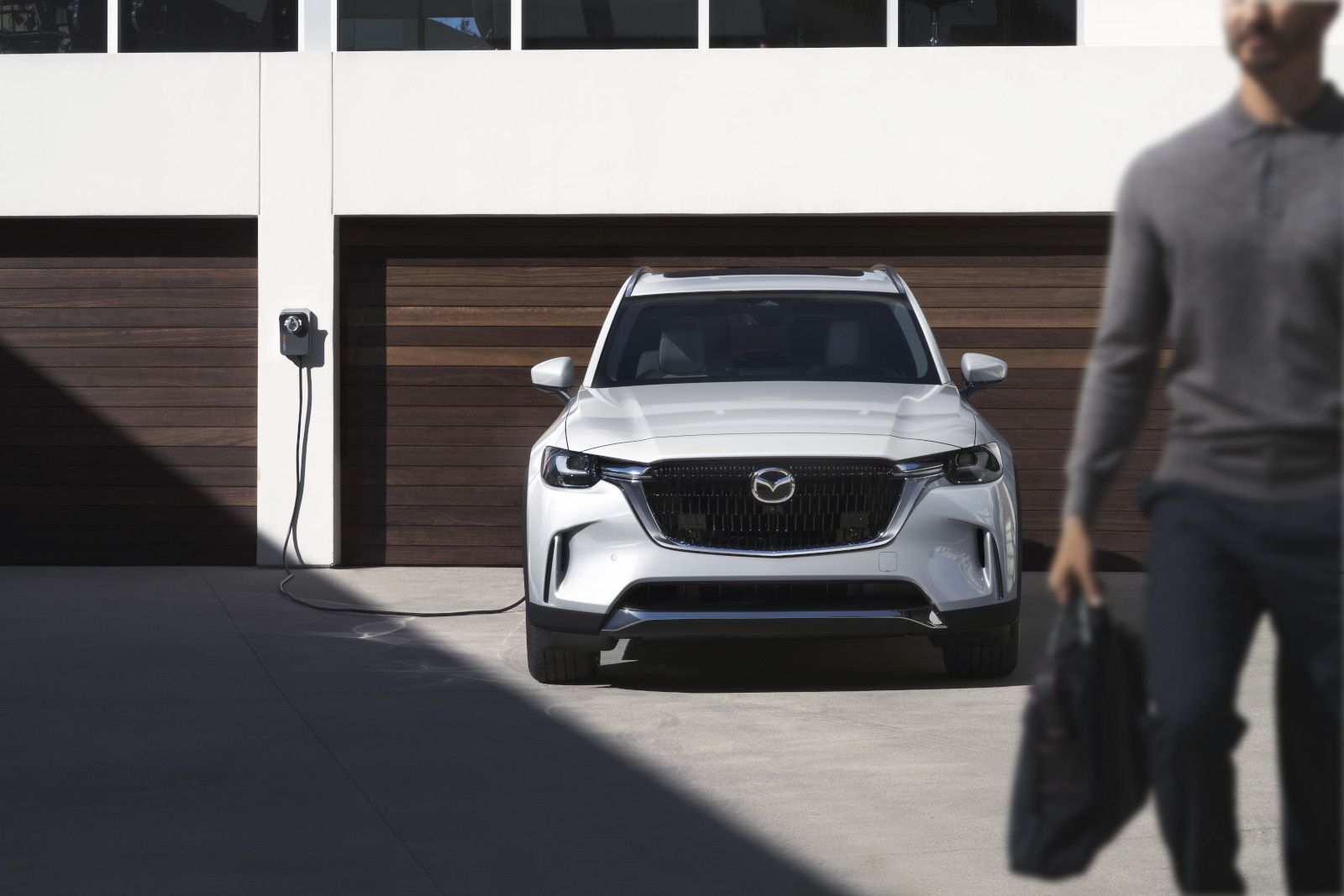
Mazda is taking a different path to electrification than many of its competitors. Rather than committing to a single battery-electric vehicle platform, the company is developing multiple powertrain technologies at the same time — mild hybrids, plug-in hybrids, and a dedicated battery-electric vehicle platform — and rolling them out across its lineup based on how and where drivers actually use their vehicles. Mazda calls this the "Multi-Solution Strategy," and it has direct implications for buyers in British Columbia, where powertrain preferences vary depending on geography, driving distances, and access to charging infrastructure.
For BC drivers who are evaluating electrified options but are not sure which type of hybrid or electric powertrain fits their daily routine, here is a breakdown of what Mazda currently offers and what is on the way.
How the Multi-Solution Strategy Works
At a March 2025 briefing in Tokyo, Mazda President and CEO Masahiro Moro outlined the company's approach. Instead of building one type of electrified powertrain and applying it across the lineup, Mazda is developing three categories simultaneously: mild hybrid (MHEV) engines, plug-in hybrid (PHEV) systems, and a future battery-electric vehicle (BEV) platform.
The reasoning is practical. Canada's geography creates vastly different driving conditions from province to province. A driver in downtown Vancouver has access to public charging stations and drives short distances daily. A driver in the BC Interior covers long highway stretches where charging infrastructure is sparse and winter temperatures can affect battery range. A single powertrain solution does not serve both equally well.
By offering multiple options, Mazda allows each buyer to choose the powertrain that matches their actual driving patterns rather than adapting their habits to fit a single technology.
What Mazda Offers Today

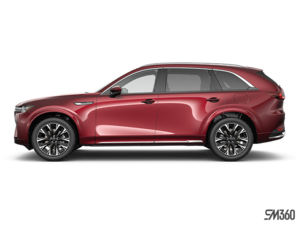
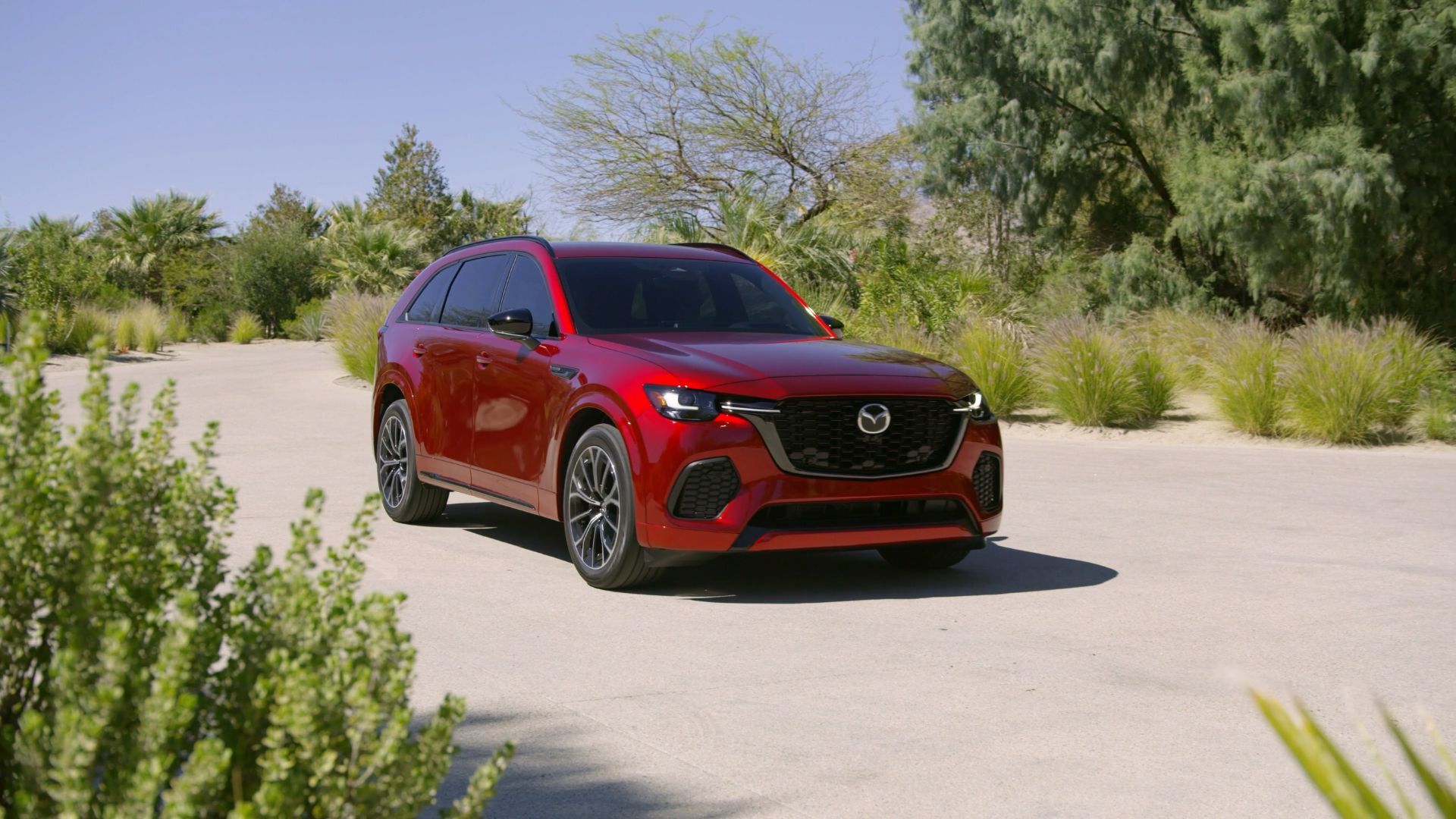
Mazda's current electrified lineup in Canada includes two powertrain families: the 48-volt mild hybrid inline-six turbo and the plug-in hybrid system. Both are built on Mazda's Large Architecture — the same rear-biased all-wheel-drive platform that underpins the CX-70 and CX-90.
Key Electrified Powertrain Options
|
Powertrain |
Available On |
Output |
Key Benefit |
|---|---|---|---|
|
e-Skyactiv G 3.3 L Inline-6 Turbo MHEV (Standard) |
CX-70 GS-L, GT / CX-90 GS, GS-L, GT |
280 hp, 332 lb-ft (regular fuel) |
Smooth inline-six power with improved fuel efficiency from 48V mild hybrid assist |
|
e-Skyactiv G 3.3 L Inline-6 Turbo MHEV (High Output) |
CX-70 GT-P, Signature / CX-90 GT-P, Signature |
340 hp, 369 lb-ft (premium fuel) |
Higher performance with up to 5,000 lb towing capacity |
|
e-Skyactiv PHEV |
CX-70 PHEV / CX-90 PHEV |
323 hp, 369 lb-ft (premium fuel) |
Up to 42 km electric-only range, 4.2 Le/100km combined energy consumption |
The MHEV system uses a 48-volt mild hybrid to support the inline-six engine during acceleration and capture energy during braking. It does not power the vehicle on electricity alone. Its primary role is to deliver smoother torque, reduce turbo lag at low speeds, and modestly improve fuel economy. The 48-volt system runs on regular fuel in the standard tune (280 hp) and premium fuel in the high-output tune (340 hp).
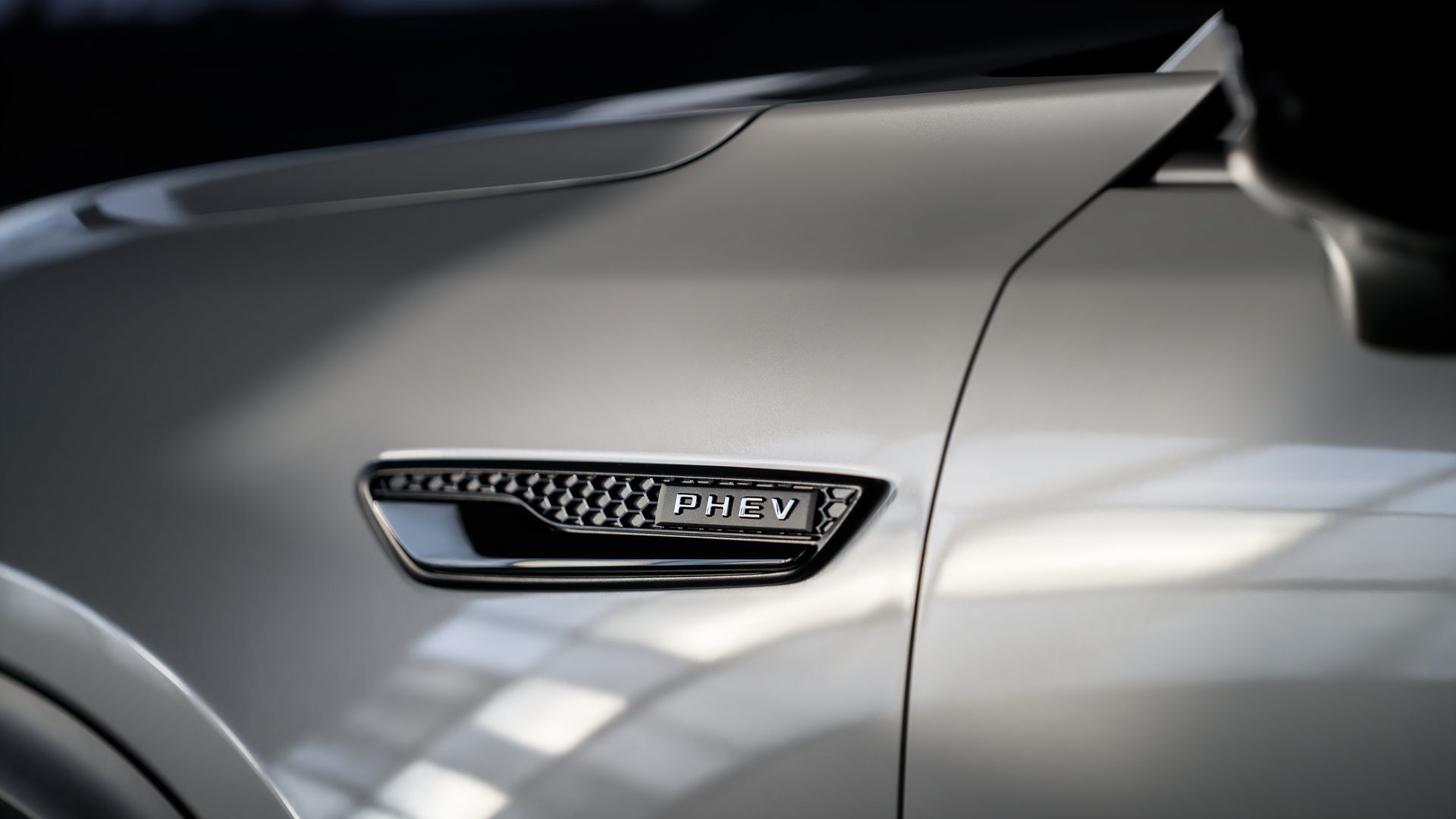
The PHEV system pairs a 2.5 L four-cylinder engine with an electric motor and a 17.8 kWh lithium-ion battery. It can drive up to 42 km on electric power alone, making it well-suited for short urban commutes in Metro Vancouver. When the battery is depleted, it operates as a conventional hybrid. All PHEV models include an EV mode in the Mi-Drive system, giving the driver control over when to prioritize electric driving.
What Is Coming Next: Skyactiv-Z and In-House Hybrid
Mazda confirmed that a new engine called Skyactiv-Z will debut in the CX-5 in 2027, paired with Mazda's own in-house hybrid system. This is a notable development for several reasons.
The Skyactiv-Z engine is designed to meet stringent upcoming emissions standards, including Euro 7 in Europe and LEV4/Tier 4 in North America, while still delivering high fuel economy and an engaging driving experience. Paired with Mazda's proprietary hybrid system, it will bring hybrid efficiency to the compact crossover segment — the CX-5 is Mazda's best-selling vehicle in Canada, with over 300,000 sold since 2012.
For BC drivers, this means the CX-5 lineup will gain a hybrid option developed entirely in-house by Mazda, distinct from the Toyota-sourced hybrid technology used elsewhere in the industry. The in-house system is expected to maintain the driving dynamics that Mazda prioritizes across its lineup.
A Dedicated Battery-Electric Vehicle Is Also Planned
Beyond hybrids, Mazda is developing an in-house battery-electric vehicle platform set for 2027. This platform is designed to be flexible in both hardware and software, accommodating various battery types and vehicle sizes. Battery cells are being developed in collaboration with Panasonic Energy Corporation, and the vehicle will be produced in Japan for global distribution.
Mazda's approach to BEV production is also notable. The company plans to use its existing mixed-flow production lines — enhanced through what it calls "Monozukuri Innovation 2.0" — to build electric vehicles alongside conventional models. This strategy reduces initial capital investment by an estimated 85% and preparation time by 80% compared to constructing a new dedicated EV plant.
Why This Matters for Drivers in British Columbia
British Columbia holds a 12.5% zero-emission vehicle (ZEV) market share, making it one of the most electrification-friendly provinces in Canada. At the same time, hybrids have seen strong growth nationally, with hybrid registrations surging 36.1% in 2025 while battery-electric registrations declined.
This split reflects a practical reality: many Canadian drivers want improved fuel efficiency and lower emissions without the range and charging concerns that come with a fully electric vehicle. Mazda's Multi-Solution approach is designed for exactly this market, offering a spectrum of options — from mild hybrids that require no charging infrastructure, to plug-in hybrids that handle short commutes on electricity, to a future BEV for drivers ready to go fully electric.
For buyers in the Burnaby area who are exploring which electrified powertrain makes sense for their driving habits, the team at Metrotown Mazda can walk through the current MHEV and PHEV options in the CX-70 and CX-90 lineup. Stop by to learn more about what is available today and what is on the horizon.